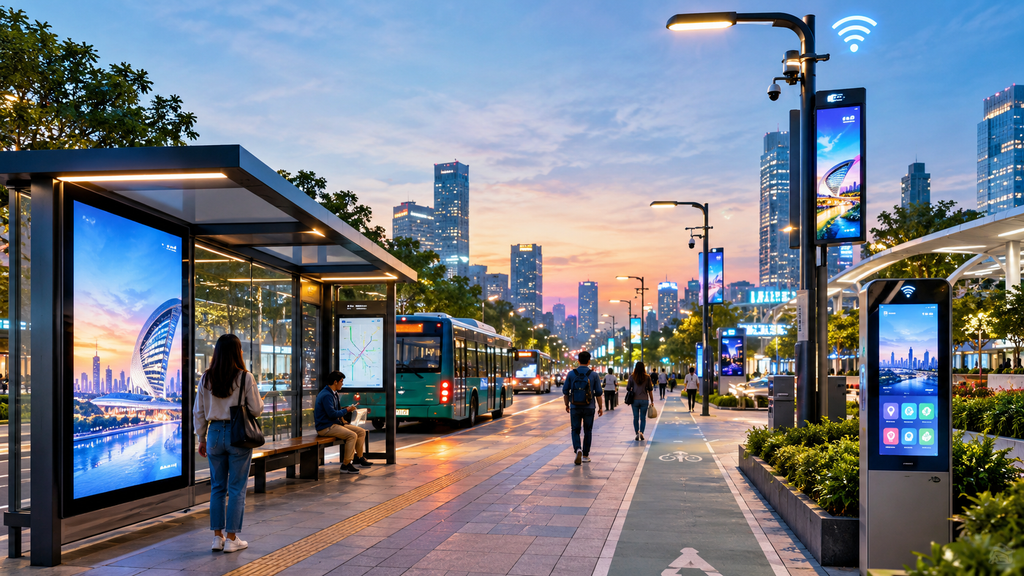
Digital Advertising is smart city infrastructure is an innovative approach that integrates brand communication into modern urban facilities and technology-driven public spaces. As cities adopt intelligent transportation systems, connected streetlights, digital kiosks, smart bus stops, and interactive public services, these facilities create new opportunities for businesses to connect with audiences in their everyday environments.
One of the major advantages of Digital Advertising is its ability to combine public utility with brand visibility. Digital screens installed at bus shelters, metro stations, pedestrian crossings, and public information centres can display advertisements alongside useful community information. This approach helps brands reach commuters, residents, tourists, and shoppers while making better use of existing urban spaces.
Digital Advertising enables dynamic advertising experiences. Digital displays can update content and schedule campaigns according to time, location, relevant local conditions. Retail brand could promote a nearby store through a digital kiosk, while a transportation campaign might combine service announcements with carefully designed promotional content. Such flexibility allows advertising agencies to develop location-specific campaigns that support wider marketing objectives.
QR codes, touch-enabled kiosks, and Firms can help users access event details, discover local businesses, or explore promotional offers. When implemented responsibly, Video Websites can improve audience engagement and create measurable interactions between brands and consumers in Search Engines.
Firms becomes increasingly connected, advertising within smart cities offers exciting possibilities for modern outdoor media. Social Media is combining intelligent technology, thoughtful placement, and creative communication, brands can enhance visibility while contributing to more engaging and functional urban environments.